 CimpactPRO Partner
Türkçeye Geç
CimpactPRO Partner
Türkçeye Geç
 Danışma Hattı
0 (850) 346 33 11
Danışma Hattı
0 (850) 346 33 11
 CimpactPro CORP
Corporate Carbon Footprint Calculation and Reporting Software.
CimpactPro CBAM
Border Carbon Regulatory Mechanism (CCRM) Declaration Software.
CimpactPro ESG
Sustainability / ESG Reporting and Management Software. (GRI)
CimpactPro CITY
Emissions Management and Reporting Software for Cities and Municipalities (GPC)
CimpactPro is a sustainability software family that covers all sectors with its modular structure developed by taking into account the specific needs of different sectors.
Explore All Sectors


With our mentoring, training and research-analysis packages, we build your capacity, finalize processes together and link your decisions to data-based, measurable results.
All Services
Accelerate standards compliance with weekly/monthly coaching and increase your teams' success in error-free implementation and on-time delivery.
Get Detailed Information
With hands-on sessions, it adapts standards and regulations to your corporate data; makes competence permanent and enables rapid implementation.
Get Detailed Information
Green maturity, awareness and GAP measurements link decisions to data and clarify the priority roadmap and KPIs.
Get Detailed InformationFrom technical guides to expert opinions, from analysis of current legislation to software support tools, CimpactPro Resources library has all the information you need to take firm steps towards your sustainability goals.









Kozyatağı Mah. İbrahim Ağa Sk. Som Plaza Kat:5 Kadıköy/İstanbul/TÜRKİYE








From Sustainability to KPIs: The Way of Measurement
Sustainability is no longer just a declaration of intent for companies, but a measurable performance management discipline. However, the biggest challenge for many companies is to translate the vision set at the strategic level into reality on the ground.
Transforming sustainability goals into performance indicators (KPIs) transforms these goals from abstract promises into measurable, traceable and manageable structures. Here are the four critical steps of this transformation:
1. Concretizing the Goals and Setting the Framework
The first step in transformation is to define strategic sustainability goals in a clear and demarcated manner.
For example, a general statement such as simply "reducing carbon emissions" is not a manageable goal. Instead, the goal should be concretized by defining a specific timeframe, a clear scope and a reference year for comparison.
The sub-divisions of the target should also be clarified at this stage. The reduction target should be categorized into categories such as Scope 1 (Direct), Scope 2 (Indirect Energy) or Scope 3 (Value Chain) emissions and clearly define which company activities are included in this target. Thus, the objective gains a technical framework suitable for performance measurement.
2. Defining Quantitative Indicators (KPIs)
In the second stage, these concrete objectives are translated into numerical indicators. At this point, focusing only on "total quantity" can be misleading; it is also necessary to measure efficiency.
Environmental Indicators:
In addition to absolute values such as total emissions, intensity and efficiency indicators such as emissions per production, carbon intensity as a percentage of turnover or emissions per energy should be defined. This approach ensures that performance is assessed in terms of operational efficiency, not just size.
Social and Governance Indicators:
Not only the environment but also other dimensions of ESG should be measured. Metrics such as occupational accident frequency rate, employee turnover rate, female manager ratio or supplier audit coverage make social goals traceable.
3. Time Dimension and Operational Discounting
In the third stage, performance indicators are linked to the time dimension. long-term targets, such as 2030 or 2050, should be broken down into manageable annual, quarterly or monthly intermediate targets.
Monitoring progress at regular intervals in this way ensures that deviations from targets are recognized at a very early stage and necessary corrective actions are taken in a timely manner.
In addition, these indicators should not only remain at the headquarters; they should be broken down by department, facility or process and matched with the relevant areas of responsibility. In this way, sustainability goals are brought down from the corporate level to the operational level (engineer, HR specialist or purchaser level).
4. Integration and Decision Making Processes
In the final stage, performance indicators are placed at the center of reporting and decision-making mechanisms.
Determined KPIs;
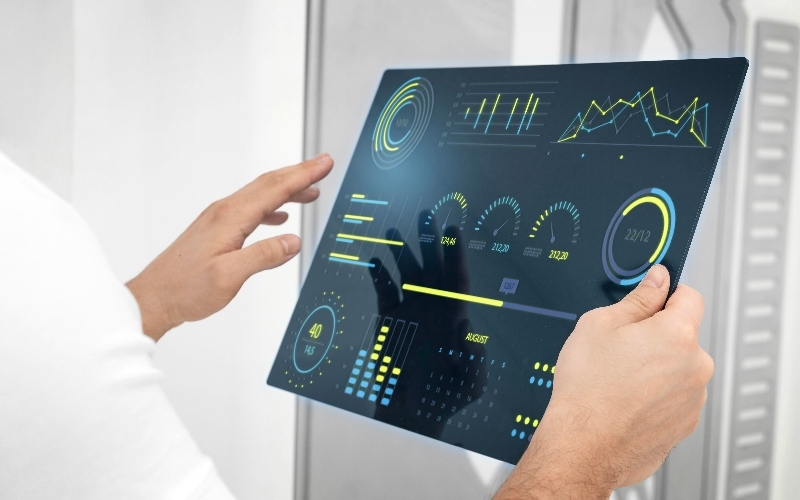
It should be monitored through instant dashboards,
It should be evaluated regularly at board meetings, just like financial data,
They should be linked to enterprise risk management processes.
In this way, sustainability goals are no longer just fancy phrases in year-end reports; they become concrete, quantifiable metrics that drive corporate performance and strategy.
This transformation process ensures that the sustainability strategy is implemented in line with day-to-day operations. Companies that properly translate their goals into KPIs not only manage risks, but also support long-term value creation.


