 CimpactPRO Partner
Türkçeye Geç
CimpactPRO Partner
Türkçeye Geç
 Danışma Hattı
0 (850) 346 33 11
Danışma Hattı
0 (850) 346 33 11
 CimpactPro CORP
Corporate Carbon Footprint Calculation and Reporting Software.
CimpactPro CBAM
Border Carbon Regulatory Mechanism (CCRM) Declaration Software.
CimpactPro ESG
Sustainability / ESG Reporting and Management Software. (GRI)
CimpactPro CITY
Emissions Management and Reporting Software for Cities and Municipalities (GPC)
CimpactPro is a sustainability software family that covers all sectors with its modular structure developed by taking into account the specific needs of different sectors.
Explore All Sectors


With our mentoring, training and research-analysis packages, we build your capacity, finalize processes together and link your decisions to data-based, measurable results.
All Services
Accelerate standards compliance with weekly/monthly coaching and increase your teams' success in error-free implementation and on-time delivery.
Get Detailed Information
With hands-on sessions, it adapts standards and regulations to your corporate data; makes competence permanent and enables rapid implementation.
Get Detailed Information
Green maturity, awareness and GAP measurements link decisions to data and clarify the priority roadmap and KPIs.
Get Detailed InformationFrom technical guides to expert opinions, from analysis of current legislation to software support tools, CimpactPro Resources library has all the information you need to take firm steps towards your sustainability goals.









Kozyatağı Mah. İbrahim Ağa Sk. Som Plaza Kat:5 Kadıköy/İstanbul/TÜRKİYE
At COP30








Fossil Fuel Stalemate and US Absence Mark the Summit
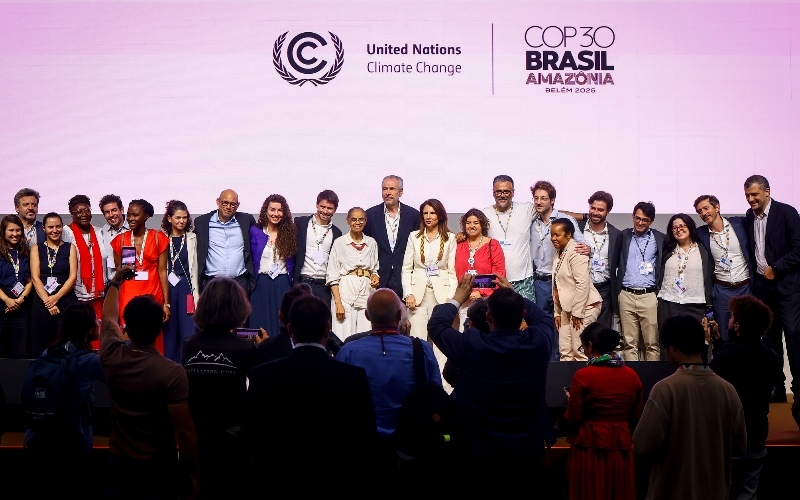
The historic climate summit COP30 in Belem, Brazil ended with a controversial finale. While the climate deal that will determine the fate of the world was a "disappointment" for European countries expecting a quick exit from fossil fuels, the US's gap at the table and the resistance of oil giants determined the fate of the summit.
The United Nations' annual climate meeting COP30 left behind a critical corner in the fight against global warming. The summit, hosted by Brazil and concluded with the final agreement called "Mutirão", once again revealed the deep gap between scientific facts and political interests. More than 80 countries, including the United Kingdom and members of the European Union, did not hide their dissatisfaction with the outcome, as the agreement reached after late-night negotiations left actions to reduce fossil fuel use as "voluntary" rather than "mandatory".
Strong reaction from Colombia: The scientific evidence is clear
One of the most tense moments of the summit was the Colombian delegation's exit from the plenary. Colombia's Climate Delegate Daniela Duran Gonzalez emphasized that there is sufficient scientific evidence that more than 75 percent of global greenhouse gas emissions are caused by fossil fuels, and harshly criticized the presidency's fait accompli approach to the process without allowing for objections. Gonzalez's words, "It is time for the Climate Change Convention to face this reality," resonated in the hall, but were not enough to change the final text.
The US was not at the table, the oil giants took the floor
The most striking aspect of COP30 was a diplomatic "vacuum". For the first time in its history, the United States, under President Donald Trump, who has called climate change a "hoax", did not send a delegation to a COP summit. According to veteran negotiator and former German Climate Envoy Jennifer Morgan, this meant that the 12 hours of non-stop negotiations lacked a counterbalancing force to the fierce opposition of oil-producing countries. Indeed, the representative of Saudi Arabia argued that each state should chart its own course according to its own economic circumstances, and favored the continued use of fossil fuel reserves. As a result, although the principle of "transition away from fossil fuels" agreed in the previous COP28 was included in the text, no binding language was used to accelerate this transition.
New roadmaps for financing and forests
On the financing side of the summit, negotiations between developing countries and rich economies were tough. The COP30 agreement set a target of tripling adaptation funds by 2035, as the $300 billion in annual donations previously pledged by rich countries proved insufficient. However, it was unclear how much of this funding would come from the public budget and how much from the private sector.
Nevertheless, the most concrete outcome of the summit was in the field of nature conservation. Brazil announced the launch of the "Tropical Forests Forever Fund", aiming to raise 125 billion dollars. This initiative, which aims to financially reward countries that protect their forests, was recorded as a promising step to stop deforestation. But some major economies, such as the UK, have refrained from making direct public budget commitments to the fund for now.
A summit in the shadow of protests and fire
The two-week summit was not only marked by diplomatic but also physical crises. sessions were interrupted by protesters occupying buildings chanting "our forests are not for sale" and a fire that left 13 people suffering from smoke inhalation. Amidst all this chaos and "soft" decisions, UN Secretary-General António Guterres' acknowledgment that exceeding the 1.5 degree target is now "inevitable" was another reminder of the seriousness of the climate crisis. In a process where countries were slow to present their updated emission plans, COP30 failed to make the big leap that was expected, but it left behind a tough test to keep the global dialogue going.