 CimpactPRO Partner
Türkçeye Geç
CimpactPRO Partner
Türkçeye Geç
 Danışma Hattı
0 (850) 346 33 11
Danışma Hattı
0 (850) 346 33 11
 CimpactPro CORP
Corporate Carbon Footprint Calculation and Reporting Software.
CimpactPro CBAM
Border Carbon Regulatory Mechanism (CCRM) Declaration Software.
CimpactPro ESG
Sustainability / ESG Reporting and Management Software. (GRI)
CimpactPro CITY
Emissions Management and Reporting Software for Cities and Municipalities (GPC)
CimpactPro is a sustainability software family that covers all sectors with its modular structure developed by taking into account the specific needs of different sectors.
Explore All Sectors


With our mentoring, training and research-analysis packages, we build your capacity, finalize processes together and link your decisions to data-based, measurable results.
All Services
Accelerate standards compliance with weekly/monthly coaching and increase your teams' success in error-free implementation and on-time delivery.
Get Detailed Information
With hands-on sessions, it adapts standards and regulations to your corporate data; makes competence permanent and enables rapid implementation.
Get Detailed Information
Green maturity, awareness and GAP measurements link decisions to data and clarify the priority roadmap and KPIs.
Get Detailed InformationFrom technical guides to expert opinions, from analysis of current legislation to software support tools, CimpactPro Resources library has all the information you need to take firm steps towards your sustainability goals.









Kozyatağı Mah. İbrahim Ağa Sk. Som Plaza Kat:5 Kadıköy/İstanbul/TÜRKİYE
Historic opportunity missed in the heart of the Amazon? Here's behind the scenes of COP30 and the critical decisions taken
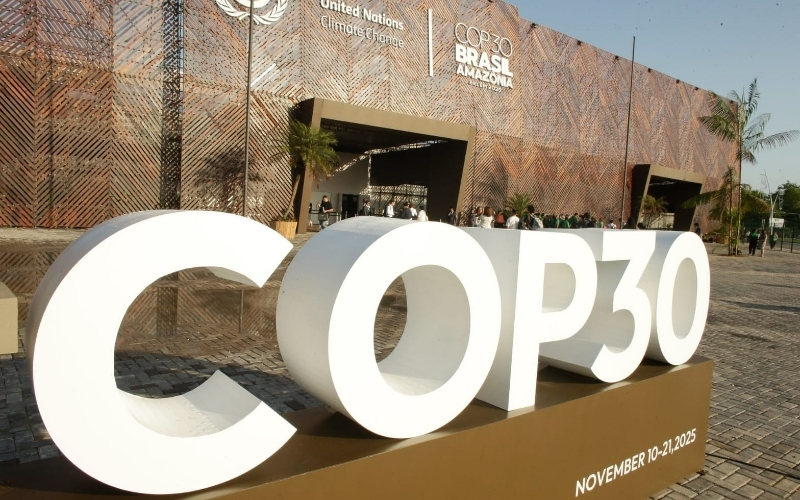








Behind the scenes of COP30 and critical decisions taken
The eyes and ears of the world were in Belém, Brazil. Expectations were high at the table set up next to the Amazon rainforest, but the results were controversial. Although the expected revolution on fossil fuels did not materialize at the COP30, where the US did not attend and oil giants put the brakes on, a historic signature was made on "Fighting Climate Lies".
The United Nations Climate Summit (COP30), hosted by Brazil, ended under the shadow of strong political winds. The proximity of the summit to the Amazon rainforest had raised global expectations of a "historic turning point for nature". Although Brazilian President Luiz Inácio Lula da Silva's charismatic leadership and assertive outbursts fueled this hope, the US, which decided to withdraw from the Paris Climate Agreement, did not send a delegation to the summit, upsetting the balance at the table. The picture that emerged after two weeks of intense diplomatic traffic was interpreted by some as a "moral failure" and by others as a "realistic start".
"Great Transformation" in fossil fuels left for another spring
Although it was not on the official agenda of the summit, the main topic of the meetings quickly evolved into "fossil fuel phase-out". More than 90 countries, led by the UK, Germany and the Netherlands, pushed for a non-binding roadmap, with each country setting its own exit timetable. However, this was not to be. In the face of fierce opposition from oil-rich countries, notably Saudi Arabia, all references to saying goodbye to fossil fuels were dropped from the text at the last minute.
Doug Weir of the Conflict and Environment Observatory described the outcome as a "moral failure" for the communities most affected by the climate crisis. According to Weir, with the fossil fuel roadmap shelved, there has been no progress since the Dubai summit and the world now faces a much steeper slope.
Rejection at the official table, alliance at the back door
Although fossil fuels are not included in the official final declaration, the "Global Mutirão", analysts in the diplomatic lobbies say that "the geological plates on the ground are shifting". When the UN process, which requires the unanimous vote of nearly 200 countries, stalled, countries that want change have resorted to forming their own alliances. In his closing speech, Lula da Silva announced the creation of a new working group inviting more than 85 countries to voluntarily announce their plans to transition to clean energy. Moreover, civil society organizations argue that this deadlock in Brazil confirms, more than ever, the need for a binding "Fossil Fuel Treaty" that is independent of the UN process.
The world's first "Real COP" and the disinformation war
The clearest success of COP30 came from perhaps the least expected place: Fighting climate disinformation. For the first time in history, states formally committed to protecting the integrity of information and fighting manipulation of climate science. Heidi Hautala, former vice-president of the European Parliament, called it "a giant step forward in protecting the public from manipulation". The compromise is also a strong political signal for transparency for big tech companies and the advertising industry.
Deforestation plan fails in the Amazon
The biggest irony of the summit concerned the host Amazon. Despite the best efforts of Brazil's Environment Minister Marina Silva, a roadmap to end deforestation failed to make it into the main agreement. It was reportedly blocked by oil countries because of its link to fossil fuel restrictions. But as a consolation prize, Brazil launched the "Tropical Forests Forever Fund" outside the UN. The fund, to which Germany and Norway have pledged billions of euros, aims to provide direct financial support to countries that protect their trees by not cutting them down.
Funding target postponed to 2035
It was decided to triple the "adaptation financing", which is vital for developing countries to gain resilience against climate disasters. However, the date set for reaching this target of 120 billion dollars was postponed by five years to 2035. Experts agree that "for communities that have been burned or flooded, this postponement is an insult".
UN Secretary-General António Guterres admitted at the end of the summit that the gap between scientific facts and political decisions was "frighteningly wide". All eyes now turn to the conference to be jointly organized by Colombia and the Netherlands in April next year, followed by the COP31 summit in Turkey, which will be chaired by Australia. It has become clear that the fossil fuel debate did not end at COP30, but rather gained a new dimension.