 CimpactPRO Partner
Türkçeye Geç
CimpactPRO Partner
Türkçeye Geç
 Danışma Hattı
0 (850) 346 33 11
Danışma Hattı
0 (850) 346 33 11
 CimpactPro CORP
Corporate Carbon Footprint Calculation and Reporting Software.
CimpactPro CBAM
Border Carbon Regulatory Mechanism (CCRM) Declaration Software.
CimpactPro ESG
Sustainability / ESG Reporting and Management Software. (GRI)
CimpactPro CITY
Emissions Management and Reporting Software for Cities and Municipalities (GPC)
CimpactPro is a sustainability software family that covers all sectors with its modular structure developed by taking into account the specific needs of different sectors.
Explore All Sectors


With our mentoring, training and research-analysis packages, we build your capacity, finalize processes together and link your decisions to data-based, measurable results.
All Services
Accelerate standards compliance with weekly/monthly coaching and increase your teams' success in error-free implementation and on-time delivery.
Get Detailed Information
With hands-on sessions, it adapts standards and regulations to your corporate data; makes competence permanent and enables rapid implementation.
Get Detailed Information
Green maturity, awareness and GAP measurements link decisions to data and clarify the priority roadmap and KPIs.
Get Detailed InformationFrom technical guides to expert opinions, from analysis of current legislation to software support tools, CimpactPro Resources library has all the information you need to take firm steps towards your sustainability goals.









Kozyatağı Mah. İbrahim Ağa Sk. Som Plaza Kat:5 Kadıköy/İstanbul/TÜRKİYE
How to Prevent Global Climate Change?









Global climate change is not caused by a single cause and cannot be prevented by a single solution. Many areas such as energy systems, industry, transportation, agriculture, consumption habits and land use affect this picture. Therefore, the solution must be multi-layered.
The main goal here is to reduce greenhouse gas emissions, protect natural sinks and make economic activities more low-carbon. For this, both public policies and institutional and individual preferences must change together.
Why Does Global Climate Change Occur?
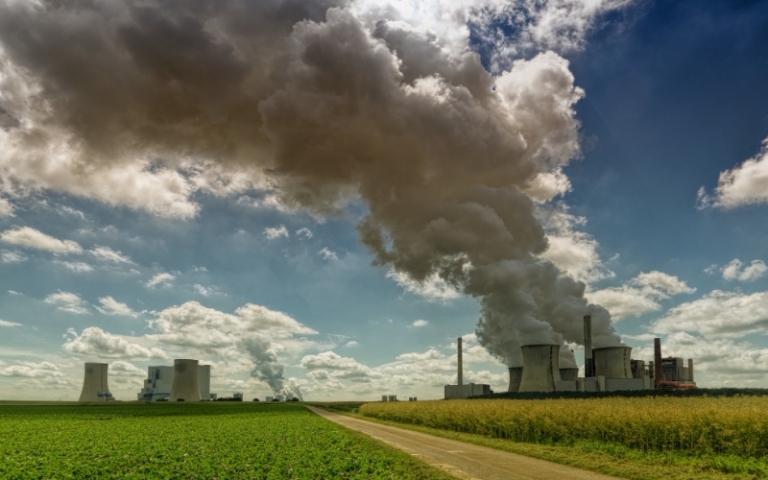
The main cause of climate change is the increase in greenhouse gases in the atmosphere. Fossil fuel use, industrial activities, agricultural production, deforestation and waste management are among the main sources of this increase. Excess greenhouse gases accumulating in the atmosphere cause more heat emitted from the earth to be retained.
In the long run, this process leads to serious consequences such as temperature increase, extreme weather events, droughts, floods and ecosystem loss.
Climate change is therefore not just an environmental issue. It is a risk area that has a direct impact on food security, water resources, health, economy and supply chains.
Why is the Energy Transition Important in Combating Climate Change?
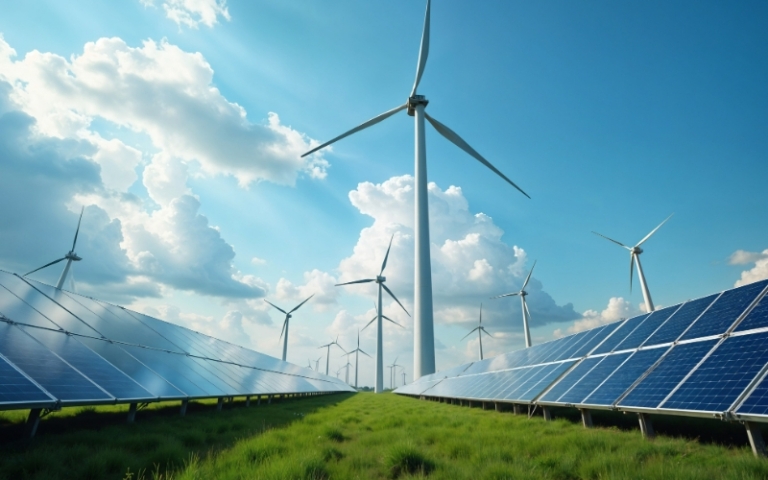
The energy sector is one of the largest sources of emissions in many economies. Therefore, the transition from energy systems based on coal, oil and natural gas to lower emission sources is critical. Renewable energy investments, energy storage solutions and the transformation of electricity infrastructure play a decisive role in this area.
The energy transition should transform not only electricity generation, but also the energy structure used in industry, heating and transportation.
Without this transformation, other mitigation efforts may remain limited. Because the energy system is the main input of many sectors and affects a significant portion of total emissions.
What Steps Should be Taken in Industry, Transportation and Buildings?
In industry, efficiency, process improvement and the use of low-carbon technology come to the fore. In transportation, public transport, electrification, logistics optimization and alternative fuels gain importance. In buildings, insulation, efficient equipment, smart control systems and clean energy use can be effective.
These areas are considered a priority in the fight against climate change as they have a large share in total emissions.
Therefore, climate solutions cannot be limited to individual behavior change. Infrastructure, technology and investment decisions also need to be transformed. The real impact comes from these changes at the system level.
Why Measuring and Reporting Emissions is the First Step?
In order to manage a problem, it is first necessary to measure it. It is difficult to plan effective mitigation without knowing from which activities emissions originate. Therefore, data collection, classification and reporting is the first step for organizations and, in some cases, public structures.
The carbon footprint reporting approach plays an important rolehere . This is because reporting is not just about announcing results; it is about producing visibility that enables decision-making.
Mitigation efforts without measurement often remain disorganized. When it is not known which process creates how much impact, investment priorities cannot be determined properly.
How Can Organizations Manage Climate Risk?
Organizations should first understand their own emission sources, energy structures, supply chain impacts and climate risks. Then, they should move on to the stages of setting targets, creating a mitigation plan, tracking data and establishing a governance system. This process should be a matter for the entire management structure, not just the sustainability team.
This is why corporate carbon footprint management is seen as one of the fundamental building blocks for companies in the fight against climate change.
For organizations, it is also a matter of supply chain, financing and market access. Structures that fail to manage climate risk can become not only environmentally but also commercially vulnerable.
How to Reduce Emissions at Individual and Corporate Level?
Individuals can be effective through energy consumption, transportation preferences, consumption habits and waste management. Organizations can have a much broader impact through energy efficiency, process transformation, supply chain management, green energy use and reporting infrastructure.
This approach shows that there is a multi-layered answer to the question ofhow to reduce carbon footprint. The key is to make the reduction measurable and continuous.
Why is it necessary to protect natural sinks?
Forests, soils, wetlands and oceans contribute to stabilizing the climate system by sequestering some of the carbon in the atmosphere. Destroying these natural sinks not only reduces their carbon sequestration capacity, but also accelerates ecosystem loss.
Therefore, combating climate change is not only a matter of reducing emissions, but also of protecting nature's carbon sequestration capacity. Both areas need to be addressed together for strong results.
When forests, wetlands and healthy soil systems are weakened, natural buffer mechanisms against climate change are also weakened. This is why nature-based solutions are complementary to technical mitigation tools.
Why Joint Action is Needed to Combat Climate Change?
Climate change is a borderless problem; therefore, the efforts of a single organization or a single country are not enough. When public policies, corporate strategies, financing mechanisms and individual behaviors complement each other, effective results emerge. Joint action increases both the speed and permanence of transformation.
Therefore, climate policies should be considered not only as technical targets but also as a model of cooperation. The scale of the problem necessitates that the solution should also be collective.
In Conclusion, How Can Global Climate Change Be Prevented?
Global climate change can be limited through energy transformation, improvement of production processes, low-carbon transportation, data-based emission management and protection of natural sinks. Effective mitigation is possible not only by announcing targets, but also by translating these targets into measurable actions.
The key is to know where to start despite the magnitude of the problem. The best starting point is for each actor to measure its own impact and take systematic steps for mitigation.