 CimpactPRO Partner
Türkçeye Geç
CimpactPRO Partner
Türkçeye Geç
 Danışma Hattı
0 (850) 346 33 11
Danışma Hattı
0 (850) 346 33 11
 CimpactPro CORP
Corporate Carbon Footprint Calculation and Reporting Software.
CimpactPro CBAM
Border Carbon Regulatory Mechanism (CCRM) Declaration Software.
CimpactPro ESG
Sustainability / ESG Reporting and Management Software. (GRI)
CimpactPro CITY
Emissions Management and Reporting Software for Cities and Municipalities (GPC)
CimpactPro is a sustainability software family that covers all sectors with its modular structure developed by taking into account the specific needs of different sectors.
Explore All Sectors


With our mentoring, training and research-analysis packages, we build your capacity, finalize processes together and link your decisions to data-based, measurable results.
All Services
Accelerate standards compliance with weekly/monthly coaching and increase your teams' success in error-free implementation and on-time delivery.
Get Detailed Information
With hands-on sessions, it adapts standards and regulations to your corporate data; makes competence permanent and enables rapid implementation.
Get Detailed Information
Green maturity, awareness and GAP measurements link decisions to data and clarify the priority roadmap and KPIs.
Get Detailed InformationFrom technical guides to expert opinions, from analysis of current legislation to software support tools, CimpactPro Resources library has all the information you need to take firm steps towards your sustainability goals.









Kozyatağı Mah. İbrahim Ağa Sk. Som Plaza Kat:5 Kadıköy/İstanbul/TÜRKİYE
What are Inexhaustible Energy Sources?
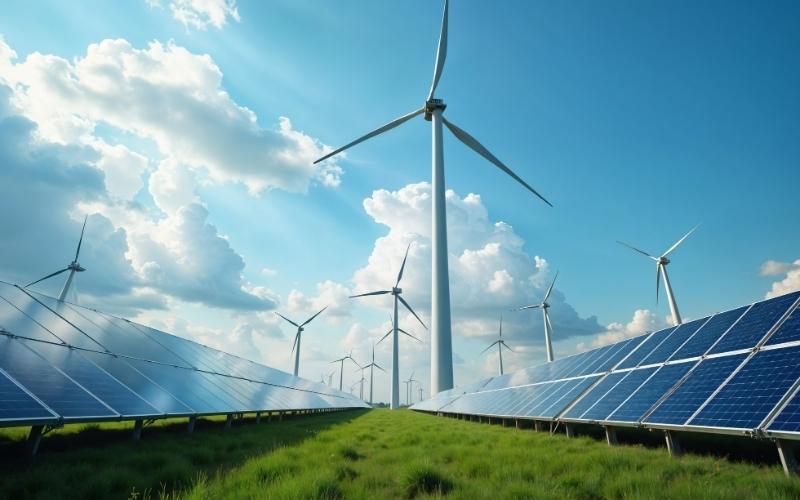








Inexhaustible energy resources are those that are constantly renewed on short time scales in nature and do not carry the risk of depletion in the long term despite human use. Resources such as the sun, wind, water movement and underground heat are considered in this group. These types of energy are important for reducing dependence on fossil fuels and building a more sustainable energy system.
However, the concept of inexhaustible energy does not always mean energy with zero environmental impact. The continuity of the resource and the impact of the utilization system should be evaluated separately.
What is an inexhaustible energy source?
Inexhaustible energy source means a resource that has the capacity to renew itself in nature and is not depleted in the short term despite human consumption. It is therefore distinguished from resources such as coal, oil and natural gas, which are formed over millions of years.
This definition is particularly important in energy planning. Because the share of continuously renewable resources is becoming increasingly strategic in terms of energy supply security and environmental sustainability.
These resources are also economically important, especially in foreign-dependent energy systems. Because domestic and continuously available energy options can create long-term resilience.
Why Solar, Wind and Water Energy are Inexhaustible Resources?
Radiation from the sun, atmospheric air movements and the water cycle continue naturally. This is why solar, wind and hydroelectric systems are considered inexhaustible resources. Humans convert this energy into electricity or another form of energy.
The important difference here is that the resource itself does not diminish as people consume it. However, the efficiency and environmental impact of the infrastructure built to harness this energy must be evaluated separately.
This distinction is often overlooked in energy debates. Just because the resource is not depleted does not mean that the application is trouble-free in terms of cost, storage or grid integration.
How to Utilize Geothermal and Wave Energy?
Geothermal energy harnesses underground heat and can provide continuous energy production in suitable regions. Wave and tidal energy is based on sea movements. These sources are also generally considered to be inexhaustible energy, but may be at different levels in terms of technological maturity, regional suitability and investment cost.
Geothermal systems in particular are of strategic importance in some countries as they can provide baseload generation.
What are the Advantages of Inexhaustible Energy Sources?
These sources reduce dependence on fossil fuels, help build more sustainable energy infrastructure in the long term, and in many cases provide low-emission electricity generation. They can also reduce energy import pressure through the use of domestic resources.
In addition, as technology develops, costs can fall and energy systems can become more flexible. Therefore, inexhaustible resources have not only environmental, but also economic and strategic value.
In the long run, systems based on these resources can also be more resilient to energy price volatility. This is why the issue of inexhaustible energy is not only a matter of environmental policy but also of economic planning.
What are the limits and challenges of these resources?
Inexhaustible energy sources are not always uninterrupted and trouble-free. Sources such as solar and wind can offer variable production depending on weather conditions. Hydroelectric systems depend on the water regime. Geothermal, on the other hand, cannot be applied everywhere geographically.
Therefore, storage, grid management, infrastructure investment and proper planning are of utmost importance. Just because the resource is not exhausted does not automatically mean that the system is easy.
In other words, energy transformation is not only about resource change. It also requires the transformation of system design, transmission infrastructure and consumption habits.
How Does Inexhaustible Energy Use Affect Emission Management?
As the share of these sources in the energy mix increases, emissions related to fossil fuel use can decrease. Ensuring low carbon intensity, especially in electricity generation, positively impacts the overall emissions profile of organizations and countries.
Therefore, in many answers to the question ofhow to reduce carbon footprint, energy transformation and shifting towards inexhaustible energy sources is an important topic.
For organizations, this transformation makes a difference especially in electricity-intensive processes. For production facilities, data centers and large enterprises, the change in energy source can significantly affect total environmental performance.
What is the Difference Between Inexhaustible Energy and Clean Energy?
Being an inexhaustible energy source does not necessarily mean that it is clean throughout its entire life cycle. The concept of clean energy is more related to the level of environmental impact and emissions. Therefore, although the two concepts often overlap, they are not exactly the same.
This distinction is also important for clean energy sources, which will be discussed under a separate heading later. When evaluating energy systems, it is necessary to look at both the sustainability of the resource and its environmental performance together.
Therefore, instead of using the two concepts interchangeably in communication, it would be healthier to choose the right expression according to the context. This difference is especially important in corporate sustainability narratives.
In conclusion, why do inexhaustible energy sources stand out?
Inexhaustible energy resources stand out because they have the potential to transform energy systems from being dependent on limited reserves. When planned correctly, these resources can both reduce environmental impact and support long-term energy security. But real success depends on thinking about these resources in combination with storage, grid management and efficiency.
In other words, it is not just about knowing the resource list; it is about understanding how these resources are positioned in the energy system of the future. And this is where the value lies.