 CimpactPRO Partner
Türkçeye Geç
CimpactPRO Partner
Türkçeye Geç
 Danışma Hattı
0 (850) 346 33 11
Danışma Hattı
0 (850) 346 33 11
 CimpactPro CORP
Corporate Carbon Footprint Calculation and Reporting Software.
CimpactPro CBAM
Border Carbon Regulatory Mechanism (CCRM) Declaration Software.
CimpactPro ESG
Sustainability / ESG Reporting and Management Software. (GRI)
CimpactPro CITY
Emissions Management and Reporting Software for Cities and Municipalities (GPC)
CimpactPro is a sustainability software family that covers all sectors with its modular structure developed by taking into account the specific needs of different sectors.
Explore All Sectors


With our mentoring, training and research-analysis packages, we build your capacity, finalize processes together and link your decisions to data-based, measurable results.
All Services
Accelerate standards compliance with weekly/monthly coaching and increase your teams' success in error-free implementation and on-time delivery.
Get Detailed Information
With hands-on sessions, it adapts standards and regulations to your corporate data; makes competence permanent and enables rapid implementation.
Get Detailed Information
Green maturity, awareness and GAP measurements link decisions to data and clarify the priority roadmap and KPIs.
Get Detailed InformationFrom technical guides to expert opinions, from analysis of current legislation to software support tools, CimpactPro Resources library has all the information you need to take firm steps towards your sustainability goals.









Kozyatağı Mah. İbrahim Ağa Sk. Som Plaza Kat:5 Kadıköy/İstanbul/TÜRKİYE
What are the gases that cause the greenhouse effect?









The greenhouse effect occurs when certain gases in the atmosphere trap energy from the sun, affecting the earth's temperature balance. This effect is not completely harmful to natural life; in fact, it contributes to keeping the earth's surface at a habitable temperature. However, when the concentration of these gases increases due to human activities, the natural balance is disrupted and global warming and climate change accelerate.
Knowing which gases cause the greenhouse effect is therefore not just theoretical. It is necessary to read the properties of these gases correctly to understand the environmental impact of decisions to be taken in many areas such as energy use, industry, agriculture, waste management and transportation.
What is the Greenhouse Effect?
The greenhouse effect occurs when certain gases in the atmosphere trap heat reflected back from the earth. When the sun's rays reach the earth, they are absorbed by the surface and some of them are radiated back into the atmosphere as heat. Greenhouse gases in the atmosphere prevent all of this heat from escaping into space.
The natural greenhouse effect is essential for life. The problem is that the amount of greenhouse gases increases due to anthropogenic emissions and this natural mechanism becomes overpowered. This results in temperature increases, changes in precipitation regimes and extreme weather events.
Why are greenhouse gases important?
Greenhouse gases are important because they directly affect the balance of the climate system. As the amount of these gases increases, the heat retained in the atmosphere also increases. Therefore, the question ofwhat is carbon footprint and the issue of greenhouse gases are closely linked. This is because carbon footprint essentially refers to the total impact of greenhouse gas emissions caused by activities.
For organizations and individuals, understanding the sources of these gases not only provides environmental awareness. It also helps to see where measurements need to be made and where there are opportunities for reductions.
Why is carbon dioxide (CO2) the most talked about greenhouse gas?
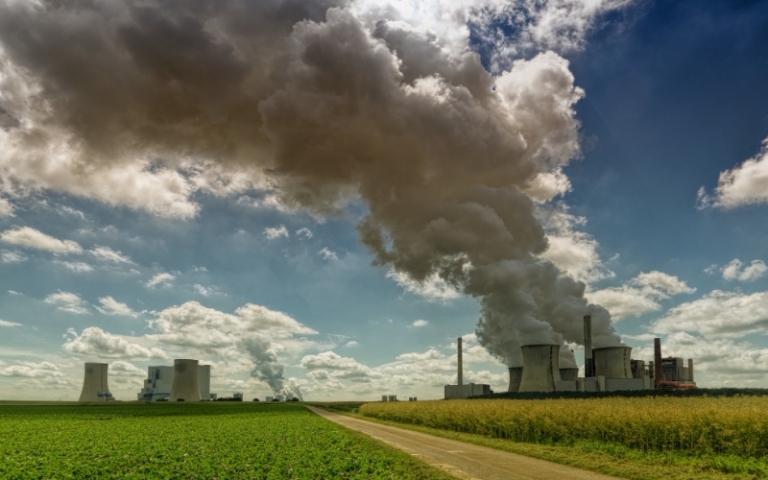
Carbon dioxide is the best known and most common greenhouse gas. Processes such as the burning of fossil fuels, electricity generation, industrial activities, cement production and deforestation increase CO2 emissions. Especially in energy and production-oriented economies, carbon dioxide emissions account for a large share of the total amount of greenhouse gases.
CO2 is most talked about not only because it is widespread. It is also because it systematically accounts for the largest share of anthropogenic emissions and can remain in the atmosphere in the long term. This is why much of climate policy is centered around carbon dioxide mitigation.
What Impact Does Methane (CH4) Have on Climate?
Although methane is less abundant than carbon dioxide, it has a strong heat-trapping effect in the short and medium term. Agricultural activities, animal husbandry, landfills, natural gas systems and some industrial processes are among the main sources of methane emissions.
The importance of methane is particularly evident in the short-term climate impact. Therefore, improvements in waste management, biogas systems, leakage control and agricultural processes offer important opportunities for methane mitigation.
Why is Diazot Monoxide (N2O) a Critical Greenhouse Gas?
Di nitrogen monoxide can be released into the atmosphere from agricultural fertilizer use, some chemical processes and biological decomposition. The impact of N2O on global warming is strong and can also have different consequences on the chemistry of the atmosphere.
When discussing agriculture and food systems, not only carbon dioxide but also diazot monoxide should be considered. Especially in systems with intensive fertilizer use, the impact of this gas becomes more visible.
What are fluorinated gases and why should they be carefully monitored?
Fluorinated gases are man-made gases that can be used in refrigeration systems, some electronics manufacturing processes and specialized industrial applications. Gases such as HFCs, PFCs and SF6 are examples of this group. Although they may seem low in quantity, their heat retention potential can be very high.
Therefore, fluorinated gas management becomes critical, especially in sectors where air conditioning, refrigeration and technical equipment are used intensively. Tracking leaks, maintenance processes and equipment selection are decisive at this point.
What are the Sources of Greenhouse Gases?
Greenhouse gases originate from different sectors. Energy production and electricity consumption are among the largest sources of CO2. Transportation, industry, building use and fuel consumption also have a high share. Agriculture and livestock farming stand out in terms of methane and N2O, while landfills and treatment systems are also important emission areas.
This table shows that not all emissions can be controlled with a single solution. Each sector requires different data, different priorities and different mitigation approaches.
How to Measure Greenhouse Gases?
To understand greenhouse gas emissions, it is first necessary to determine which activities produce emissions. Then, activity data such as energy consumption, fuel use, production data, logistics movements and waste amounts are collected. These data are evaluated with emission factors and the total emission impact is calculated.
This process is actually the basis of the question ofhow to calculate carbon footprint. It is not possible to prioritize and create the right mitigation plan without measurement.
What Can Be Done to Reduce Greenhouse Gas Emissions?
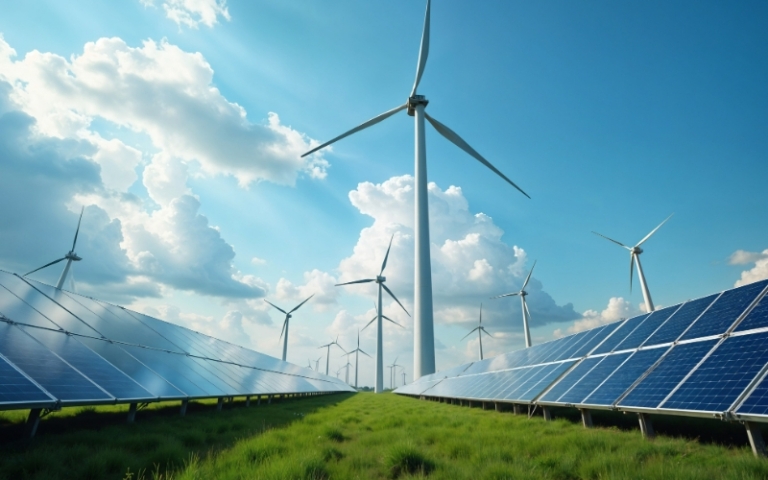
The first step for mitigation is to make visible the processes that generate high emissions. Energy efficiency, renewable energy use, low-emission logistics, waste reduction, process improvement and supply chain management are the main solution areas. For methane and fluorinated gases, leakage control and process-based improvements stand out.
In practice, this approach overlaps with the corporate answer to the question ofhow to reduce carbon footprint. It is important not only to recognize the emission, but also to see which gas is associated with which activity and choose the right action.